

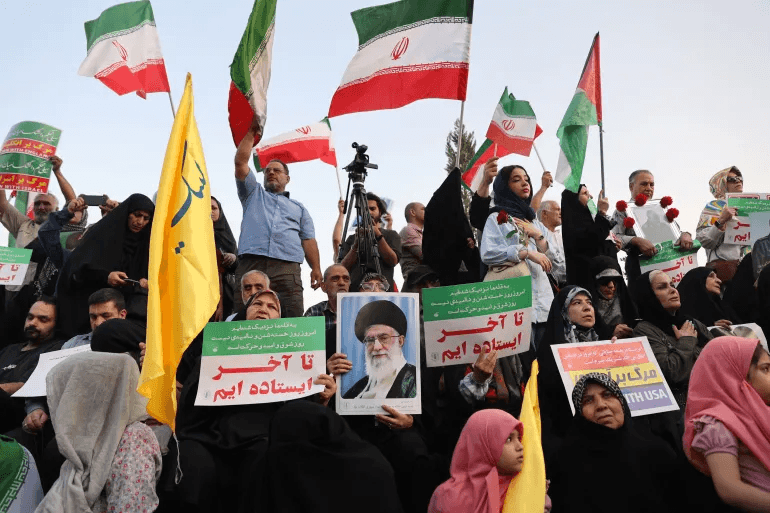
The effects of war rarely stay confined to the countries directly involved. The ongoing conflict involving the United States, Israel, and Iran has already spilled over into more than ten countries, disrupting air travel and threatening one of the world’s most critical shipping routes. For most Ugandans, this may feel like distant news. Yet modern economies are deeply interconnected — and what unfolds in the Gulf region can quietly show up at the fuel pump or the market stall closer to home.
Energy: The First Channel of Transmission
The Middle East sits at the heart of global energy supply. Roughly 20 percent of the world’s oil and gas passes through the Strait of Hormuz — a narrow sea corridor in the Persian Gulf. When tensions threaten access to this route, global oil markets react quickly, often before any physical disruption actually occurs. Analysts project that if the current situation persists, crude oil prices could climb above USD 100 per barrel.
For Uganda, which imports all of its petroleum products, this matters greatly. Higher global oil prices translate directly into higher pump prices at home. And because fuel is embedded in nearly every stage of economic activity — from transporting food from farms to moving goods across the country — rising fuel costs push up the prices of a wide range of goods and services. What begins as a distant supply shock eventually reaches the household budget.
“Because fuel is embedded in nearly every stage of economic activity, rising oil prices push up the cost of a wide range of goods — from food to manufactured products.”
Aviation Disruptions and the Cost to Trade
Beyond energy, the conflict has disrupted global aviation on a significant scale. In the first 48 hours alone, over 5,000 flights were cancelled as countries temporarily closed their airspace. The consequences extend well beyond stranded passengers. Aircraft carry not just travellers but also time-sensitive exports — Uganda’s fresh flowers, fish products, and horticultural produce rely on cargo flights to reach buyers in Europe and Asia. A delay of even one or two days can render an entire consignment unsellable, translating directly into lost income for farmers, exporters, and the workers they employ.
Gulf airports account for approximately 14 percent of global international transit traffic. When these hubs are disrupted, airlines must reroute through longer, costlier paths, and freight charges rise accordingly. Uganda’s importers face slower deliveries and higher shipping bills. Manufacturers relying on imported inputs struggle to maintain production, retailers face inventory shortfalls, and the tourism sector — which depends on smooth international connectivity, loses visitors. The disruption ripples through the entire supply chain.
How Uncertainty Shapes Economic Behaviour
Economic actors — businesses, investors, and households do not respond only to events that have already happened. They respond to what they expect might happen next. When geopolitical tensions rise, this uncertainty alone is enough to change behaviour in ways that slow economic activity.
This dynamic is well explained by what economists call the Real Options Theory, developed by Dixit and Pindyck. The core idea is simple: when the future becomes harder to predict, firms tend to delay costly, hard-to-reverse decisions like investing in new equipment, hiring staff, or expanding operations until the outlook becomes clearer. Multiplied across many businesses, this wait-and-see approach gradually reduces investment and output across the economy.
Uncertainty also shapes expectations in domestic markets. If petrol station owners anticipate fuel shortages, they may begin stockpiling inventory. If consumers expect prices to rise, they may rush to purchase goods earlier than usual. In both cases, the expectation of a problem can bring the problem forward, triggering price increases even before the underlying supply conditions have actually changed.
What Can Be Done
In the immediate term, the Ministry of Energy and Mineral Development should actively monitor domestic fuel markets to detect early signs of hoarding or speculative price increases. Where such behaviour is identified, the Uganda Revenue Authority and the Petroleum Authority of Uganda have the regulatory tools to intervene, including requiring fuel importers and distributors to disclose stock levels and flagging unusual procurement patterns.
Alongside market monitoring, the Ministry should issue regular, factual updates to businesses and the public on global oil market developments, Uganda’s fuel stock positions, and the steps being taken to secure supply. Clear and credible communication from a trusted official source reduces the risk of panic-driven behaviour that can artificially worsen shortages and price spikes.
Over the medium term, if disruptions persist, exporters and logistics firms could be supported through flexible trade facilitation measures. These could include facilitating access to alternative freight routes, expediting customs clearance, and coordinating with regional bodies such as the East African Community to reduce cross-border logistics barriers.
Joab Wamani is an Expert Associate at the Blueprint Consortium Africa, Kampala and an Assistant Lecturer at the School of Economics, Makerere University